Loading
Making heavy industry cleaner, sustainable, more profitable.

Category: Liquid Redox

16 posts

The Role of Natural Gas

The move towards a decarbonized global energy system, otherwise known as the Energy Transition, is underway. In response to the concerns of key stakeholders, including the institutional investment community and regulators, energy companies are adopting initiatives to reduce emissions of Greenhouse Gasses, methane and other substances.

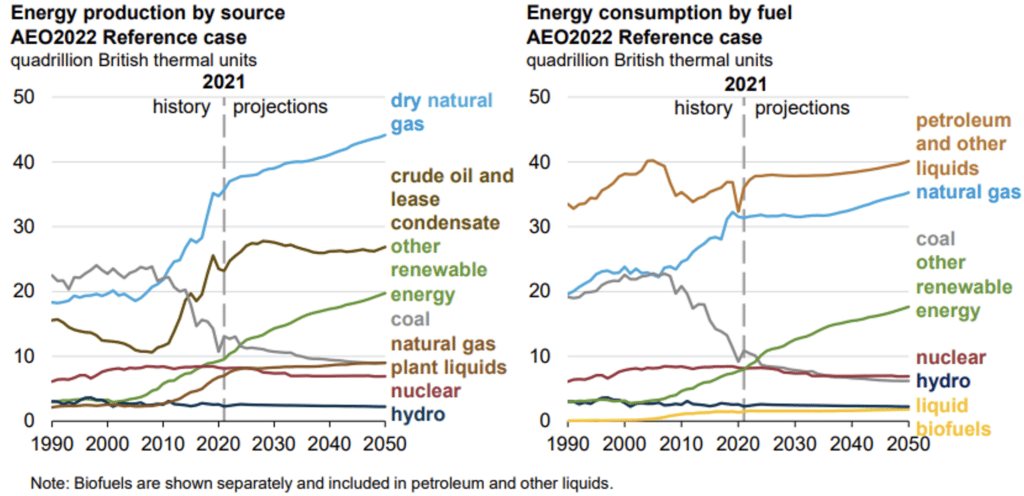
An important part of the Energy Transition is increasing the use of renewable energy sources, typically wind and solar, which emit zero emissions. Although renewable sources today make up less than 10% of total energy consumption in the United States, their share of the overall energy supply is rising rapidly.

Variability, however, is a critical factor hindering the widespread deployment of renewable energy sources. Because wind turbines don’t turn in calm conditions and solar panels have seasonality, can be substantially compromised on cloudy days, and do not provide power at night, these sources are not enough for long-term sustainability and reliability of the grid.

Battery storage has emerged as one solution for solving the problem of variability in renewable electricity production. Numerous battery storage projects are underway to provide long-term storage of electricity generated by renewables during ideal conditions (e.g., a bright sunny day for solar panels), so it can be supplied to the grid during peak demand.

Even considering battery storage, the U.S. Energy Information Agency (EIA) forecasts that renewable energy will provide only 20% of total energy supply by 2050. Meaning, the Energy Transition, if it is to be successful, cannot rely completely on renewable energy.

Increasing Gas Consumption Driving Emissions Lower

Coal-fired power plants are major emitters of Greenhouse Gasses (GHG), primarily CO2. As a result, coal-fired plants are being phased out and being replaced by natural gas fired plants. Coal-to-gas switching is a major factor driving GHG emissions lower in the U.S.

EIA reports that emissions of CO2 have declined substantially, primarily because of power plants switching to natural gas away from coal fired power plants. Further, EIA expects adoption of natural gas for power generation to increase through 2050 as it displaces coal as a primary feedstock.

Whether natural gas is produced from geologic sources or captured from biogas operations or landfills, it burns cleaner than coal, making gas a vital component of a successful Energy Transition. But where will it come from?

The Howling Wolfcamp in the Permian Basin!

As we noted in our article Gas Treating – Processing Solutions for Multiple Industries, natural gas is expected to play a foundational role in meeting future energy consumption. In fact, the U.S. Energy Information Agency (EIA) forecasts that U.S. natural gas consumption will grow by almost 25% through 2050 and maintain the second-largest market share overall.

In the EIA’s March 2022 update, the agency provided further detail on where the growth in geologic natural gas supply is expected to come from:

  • More than half of the growth in U.S. natural gas production will be sourced from oil formations, known as associated gas.
  • The largest increase in production of associated gas is in the Wolfcamp tight oil shale formation of the Permian Basin in the U.S. Southwest.
  • The proximity of the Permian Basin in general, and the Wolfcamp formation more specifically, to LNG export terminals on the U.S. Gulf Coast in Texas and Louisiana has encouraged production growth in this region.

The Permian Basin itself is the most active oil drilling region in the U.S. As of January 27, 2023, the Baker Hughes Rig Count reported 357 rigs were working in the Permian Basin, nearly half of all working rigs in the U.S. The reason is simple – the Permian is a prolific world-class oil and gas resource.

Demand for U.S. gas exports, namely liquefied natural gas (LNG), to Europe and other developed regions lacking local energy resources, is an important driver of natural gas production growth from the Permian, including the Wolfcamp and other formations in the Permian Basin.  The nearby Eagle Ford Shale contributes significantly to the availability of gas for LNG exports.

The Sour Gas Treating Challenge

One of the challenges for oil and gas operators in the Permian Basin is gas treating for hydrogen sulfide (H2S). Much of the associated gas produced from the Permian Basin in West Texas and southeastern New Mexico and the Eagle Ford trend in southern Texas generally contains high levels of H2S, making it “sour.”

Since H2S presents a significant threat to infrastructure integrity, most pipelines have stringent limits for H2S concentration that require producers to treat sour gas to remove or destroy it. We provide more detail on natural gas pipeline gas specifications in our article Gas Treating – Processing Solutions for Multiple Industries.

Sour gas assets, typically located in established oil and gas producing regions equipped with infrastructure connecting them to national and international markets, have a critical role to play in meeting the nation’s energy needs and providing energy security. Gas treating solutions are required to unlock the value of these sour gas resources so they can be transported via pipeline, instead of burned or flared, which produces harmful sulfur dioxide (SO2).

In our article, Gas Sweetening, Sour Gas Treatment Strategies by Volume, we identified the three primary categories of traditional gas treating methods for removing H2S from associated gas, but they have numerous downsides, including:

  • Create negative downstream processing effects.
  • Require the use of chemicals that can be expensive and present a safety risk.
  • Require the disposal of contaminated media, creating environmental and safety risks.
  • Operational complexity, requiring frequent oversight on location and problem solving.

A Gas Treating Innovation – Liquid Redox

There is a proven, green solution for H2S gas treating not plagued by the downsides of traditional methods – Liquid Redox. The first generation of Liquid Redox enjoyed some mixed success treating H2S, but it was not reliable enough for large-scale applications. The next generation of Liquid-Redox gas treating for H2S, however, is a different story.

VALKRYIE® Liquid Redox (Reduction-Oxidation) technology from Streamline Innovations is based on new, updated chemistry and state-of-the-art process automation to reliably convert H2S into benign byproducts including elemental sulfur using chemistry (Reduction) that can be regenerated and be used again by exposure to oxygen (Oxidation).

The gas (i.e., Methane, CO2, other process gases) or air containing the H2S exits the system sweet (i.e., without H2S) and the elemental sulfur is filtered from the regenerated chemistry.  The chemistry is then recirculated to perform the reaction again and the sulfur is collected in a container available for use or disposal.

The Streamline VALKYRIE H2S removal system is the next generation of Liquid Redox (Reduction-Oxidation) to cost-efficiently help oil and gas operators unlock the value of sour gas resources.

The VALKYRIE system utilizes TALON® chemistry, our non-toxic, biodegradable Redox chemistry. In combination with our advanced automation and control technology, Streamline has created “The Next Generation Redox” system.

Benefits of the VALKRYIE gas treating system:

  • A green solution that converts H2S into benign substances including water and elemental sulfur.
  • Universal application for biogas, landfill gas and oil and gas production.
  • Widest operating envelope of any H2S gas treating method extending across the full spectrum of pressures, flow rates and H2S concentrations.
  • Treating to established specifications for sales pipelines, gas lift and fuel gas.
  • Flexibility of placement along the production stream whether at the anaerobic digester, at a landfill, wellhead, refinery, in a direct or tail gas treating configuration.
  • Meets the most stringent outlet specifications.

VALKYRIE gas treating units have been operating reliably for oil and gas producers in the Permian Basin and elsewhere, including Chevron Corporation and Franklin Mountain Energy among others.

Citations

EIA: Natural gas explained, Where our natural gas comes from

EIA expects U.S. natural gas production to rise as demand for exports grow

EIA: Annual Energy Outlook 2022

University of Texas Interstate Natural Gas – Quality Specifications & Interchangeability

National Energy Technology Laboratory: Reservoir Simulation of Enhanced Tight Oil Recovery: Wolfcamp Shale/Midland Basin

The Role of Natural Gas

As we noted in our blog article Gas Treating – Processing Solutions for Multiple Industries, natural gas is expected to play a critical role in fulfilling future energy needs. The U.S. Energy Information Agency (EIA) forecasts that natural gas consumption will keep growing through 2050, maintaining the second-largest market share overall.

Coal-to-Gas Switching Driving Emissions Reduction

One of the major factors driving the forecasted increase in natural gas consumption is coal-to-gas switching. As coal-fired power plants are phased out, natural gas fired plants are picking up the slack.

EIA reports that emissions of CO2, a primary Greenhouse Gas (GHG) have declined substantially, primarily because of power generation switching to natural gas away from coal fired power plants. Further, EIA expects adoption of natural gas for power generation to increase through 2050 as it displaces coal as a primary feedstock.

Geologic Natural Gas Still Dominant

Although Renewable Natural Gas (RNG) production is increasing quickly as we noted in our article Gas Treating Solutions for Renewable Natural Gas, the vast majority of natural gas production in the U.S. is sourced from oil and gas wells, otherwise known as geologic natural gas. The Argonne National Laboratory estimated total RNG production capacity in the U.S. at 3% of total natural gas consumption in America. That means geologic natural gas will continue play the most essential role in meeting future energy demand.

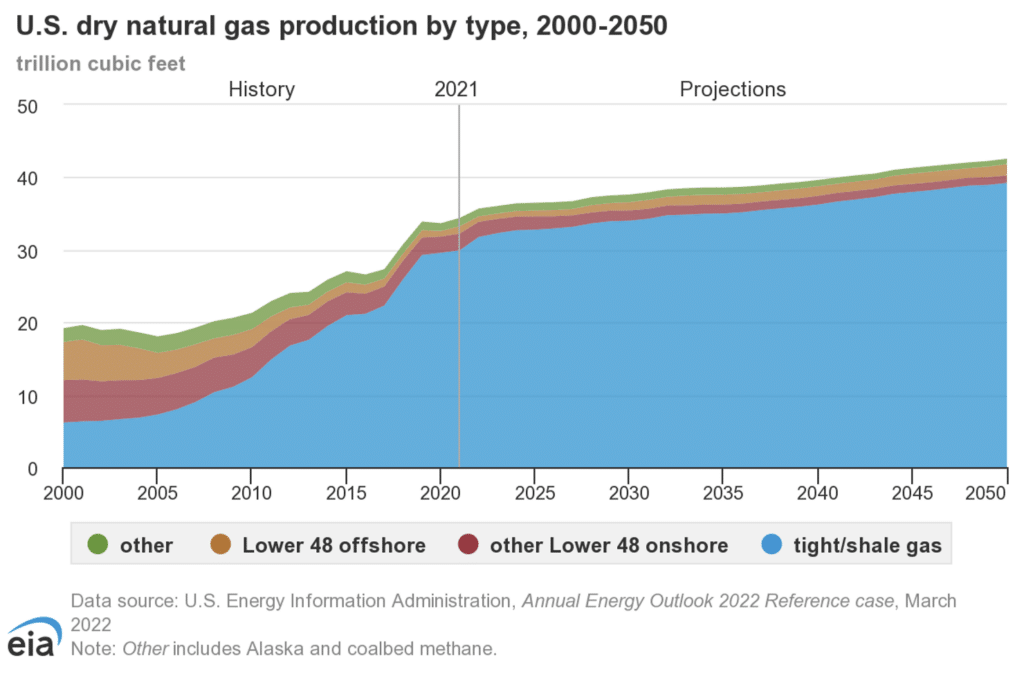
The chart below illustrates where geologic natural gas production is sourced from. Production from shale natural gas resource plays is driving the increase.

EIA chart - Natural gas Projection by Type

Why Does Sour Gas Need to be Treated?

The composition of geologic natural gas production varies widely between different regions in the United States. “Dry” natural gas produced from the Marcellus shale in the Northeast consists almost entirely of methane with very little contaminants and can be produced directly into commercial pipelines with very little or no treating.

In contrast, associated gas produced from the Permian Basin in West Texas and southeastern New Mexico and the Eagle Ford trend in southern Texas generally contains high levels of hydrogen sulfide (H2S) and CO2, making it “sour.”

Because H2S presents a significant threat to infrastructure integrity, most pipelines have stringent limits on H2S concentration that require producers to treat sour gas to remove or destroy the H2S. We provide more detail on natural gas pipeline gas specifications in our article Gas Treating – Processing Solutions for Multiple Industries.

Sour gas assets, typically located in established oil and gas producing regions equipped with infrastructure connecting them to national markets, have a critical role to play in meeting the nation’s energy needs and providing energy security. Gas treating solutions are required to unlock the value of these sour gas resources and sell the energy commercially into a pipeline.

Traditional Gas Treating Methods for Oil & Gas

In our article, Gas Sweetening, Sour Gas Treatment Strategies by Volume, we identified three primary categories of gas treating to remove H2S produced from oil and gas wells:

  • Scavengers and Adsorbents
  • Catalytic reactions
  • Mechanical destruction or Injection

These conventional H2S treatment methods are plagued with numerous downsides, including:

  • Create negative downstream processing effects
  • Require the use of chemicals that can be expensive and present a safety risk
  • Require the disposal of contaminated media, creating environmental and safety risks
  • Operational complexity, requiring frequent oversight on location and problem solving

Gas Treating Innovation – Liquid Redox

An innovative, proven solution for H2S gas treating is the current generation of  Liquid Redox. Liquid Redox has been around a while with mixed success.  The Streamline Valkyrie® Liquid Redox  (Reduction-Oxidation), with upgraded chemistry and automation, converts H2S into benign byproducts including elemental sulfur using chemistry (Reduction) that can be regenerated and be used again by exposure to oxygen (Oxidation).

The gas (i.e., Methane, CO2, other process gases) or air containing the H2S exits the system sweet (without H2S) and the elemental sulfur is filtered from the regenerated chemistry where the chemistry is recirculated to perform the reaction again and the sulfur is collected in a container available for reuse or disposal.

Our VALKYRIE H2S removal system uses this cost-efficient Redox (Reduction-Oxidation) process to help oil and gas operators unlock the value of sour gas resources.

The VALKYRIE system utilizes TALON® chemistry, our non-toxic, biodegradable Redox chemistry. In combination with our advanced automation and control technology, we have created “The Next Generation Redox” system.

Benefits of the VALKRYIE gas treating system:

  • A green solution that converts H2S into benign substances including water and elemental sulfur
  • Universal application for biogas, landfill gas and oil and gas production
  • Widest operating envelope of any H2S Treating method extending across the full spectrum of pressures, flow rates and H2S concentrations
  • Treating to established specifications for sales pipelines, gas lift and fuel gas
  • Flexibility of placement along the production stream whether at the anaerobic digester, at a landfill, wellhead, refinery, in a direct or tail gas treating configuration
  • We specialize in meeting the most stringent outlet specifications.

VALKYRIE gas treating units have been operating reliably for oil and gas producers in the Permian Basin and elsewhere, including Chevron Corporation and Franklin Mountain Energy among others.

Citations

EIA: Natural gas explained, Where our natural gas comes from

EIA: Annual Energy Outlook 2022

University of Texas Interstate Natural Gas – Quality Specifications & Interchangeability

The Role of Renewable Natural Gas (RNG)

Renewable Natural Gas (RNG) is poised to play an essential role in helping provide reliable energy to a growing world population while reducing emissions of methane and other substances that cause climate change.

The World Bank forecasts solid waste will increase nearly 70% by 2050, as the world population grows. Landfills are significant sources of methane emissions. An article in Science Advances describes using satellite imagery and analysis to estimate that landfills are the third largest source of methane emissions globally, trailing oil & gas systems and agriculture.

The Coalition for Renewable Natural Gas (RNG Coalition) notes, “Because RNG captures emissions from society’s waste streams and redeems its energy value, it has the lowest lifecycle carbon intensity (CI) of any clean energy source available today. RNG helps decarbonize energy and combats climate change.”

RNG is not just about landfills, it is potentially about all organic wastes.  For example, agricultural operations are the second largest source of methane emissions. According to U.S. Dairy, there are approximately 29,000 dairy farms in the United States, supplying humans with nutrient-dense milk and other dairy products. Cows stand at the top of the dairy product stream providing the milk supply, but their manure is a significant source of methane emissions. Collecting the manure into Anaerobic Digesters and capturing the methane it produces as it breaks down creates a potentially lucrative source of biogas.

Simply put, RNG whether it is sourced from landfills or agricultural operations is a win-win for humanity and the environment.

The Problem with Selling Biogas and Landfill Gas

Biogas and landfill gas in their raw states have some of the same problems that affect geologic natural gas produced from oil and gas wells – these raw gas streams typically contain impurities at levels that often exceed pipeline specification. Most commercial pipelines have specifications for contaminants, including oxygen, hydrogen sulfide, carbon dioxide, and other substances, to protect infrastructure and maintain safety.

Before biogas and landfill gas can be added to the gas grid, it must be upgraded or purified into RNG by removing carbon dioxide and other contaminants such as H2S, water, oxygen, and siloxanes to meet pipeline specifications. Hydrogen sulfide (H2S) is one of the most common contaminants of gas sourced from Anaerobic Digesters and Landfills, however, H2S is highly corrosive to metal pipelines, valves, and other equipment. It is critical to keep H2S out of the system to avoid the risk of a catastrophic failure.

As we noted in our article Gas Treating – Processing Solutions for Multiple Industries, The University of Texas found that the interstate pipeline specifications for H2S range between 0.25 grains per 100 cubic feet to 1.0 grains. Natural gas producers must take steps to decontaminate, purify and/or otherwise upgrade their produced gas to meet pipeline specifications.

Gas Treating for Upgrading to RNG

In our article, Gas Sweetening, Sour Gas Treatment Strategies by Volume, we identified the three primary categories of gas treating to remove H2S from landfill gas, biogas and natural gas produced from oil and gas wells:

  • Scavengers and Adsorbents
  • Catalytic reactions
  • Mechanical destruction or Injection into disposal wells

Conventional H2S treatment methods, including scavengers, adsorbents and catalytic reactions are plagued with a variety of downsides:

  • Create negative downstream processing effects
  • Require the use of chemicals that can be expensive and present a safety risk
  • Require the disposal of contaminated media, creating environmental and safety risks
  • Operational complexity, requiring frequent oversight on location and problem solving

Liquid Redox Solution for Gas Treating

In our VALKYRIE™ H2S removal system, we have commercialized a Redox (Reduction-Oxidation) process for converting H2S into elemental sulfur using chemistry (Reduction) that can be regenerated and be used again by exposure to air (Oxidation).

The gas (i.e., Methane, CO2, other process gases) containing the H2S exits the system sweet (without H2S) and the elemental sulfur is filtered from the regenerated chemistry where the chemistry is recirculated to perform the reaction again and the sulfur is collected in a container available for reuse or disposal.

The VALKYRIE system utilizes TALON® chemistry, our non-toxic, biodegradable Redox chemistry. In combination with our advanced automation and control technology, we have created “The Next Generation Redox” system.

Benefits of the VALKRYIE gas treating system:

  • A green solution that converts H2S into benign substances including water and elemental sulfur
  • Universal application for biogas, landfill gas and oil and gas production
  • Widest operating envelope of any H2S Treating method extending across the full spectrum of pressures, flow rates and H2S concentrations
  • Treating to established specifications for sales pipelines, gas lift and fuel gas
  • Flexibility of placement along the production stream whether at the anaerobic digester, at a landfill, wellhead, refinery, in a direct or tail gas treating configuration
  • 100% turndown

We specialize in meeting the most stringent outlet specifications.

Citations

World Bank press release, September 20, 2018

EPA Livestock Anaerobic Digester Database

Physics.org, Satellite data finds landfills are methane ‘super emitters’ 

U.S. Dairy, How Dairy Farmers Are Reducing Methane And Greenhouse Gas Emissions

The Importance of Natural Gas

Every realistic forecast of energy demand recognizes the critical role of natural gas in fulfilling future energy needs. The U.S. Energy Information Agency (EIA) forecasts that natural gas consumption will keep growing through 2050, maintaining the second-largest market share overall.

In the EIA Reference case (base case charts referenced above), the industrial sector has the largest share of natural gas consumption, starting in the early 2020s, driven by greater use of natural gas as a feedstock in the chemical industries and by increased heat-and-power consumption across multiple industries.

Where Does Natural Gas Come From?

Natural gas most commonly is produced from oil and gas wells. The consistency of the produced gas varies widely in North America, based on the characteristics of the oil and gas reservoir from which it was produced. More recently, however, gas production from sources other than the oil and gas industry are becoming more prominent.

  • Oil and gas. “Natural gas,” as it is most commonly thought of is produced from oil and gas wells.
  • Biogas. Produced from agricultural operations or other sources of organic wastes using anaerobic digesters to convert waste organic materials into methane and other gasses are a growing source of “natural” gas.
  • Landfill gas. Landfills are often prolific sources of methane production.  Landfills have long been gathering gas to prevent leakage, but more and more they are producing gas commercially.
  • Renewable Natural Gas (RNG). Before biogas and landfill gas can be added to the gas grid, it must be upgraded or purified into RNG by removing carbon dioxide and other contaminants t  such as H2S, water, oxygen, and siloxanes to meet pipeline specifications.

Why Does Natural Gas Need to be Treated?

Natural gas produced from oil and gas wells, landfills or agricultural operations (biogas) almost always contains contaminants that must be removed before it can be sold commercially into a pipeline.

Midstream operators, namely pipeline transportation companies, have stringent specifications for natural gas quality to protect infrastructure and maintain safety. H2S is highly corrosive to metal pipelines, valves and other equipment. It is critical to keep H2S out of the system to avoid the risk of a catastrophic failure.

The University of Texas found that the pipeline specifications for H2S, for example, for interstate pipelines range between 0.25 grains per 100 cubic feet to 1.0 grains. The same study also discovered that the typical oxygen content specification ranged between 0.2% to 1.0% by volume. Natural gas producers must take steps to decontaminate, purify and/or otherwise upgrade their produced gas to meet pipeline specifications.

Gas Treating for Industry

Given the importance of natural gas to meeting future energy demand and reducing emissions of Greenhouse gasses, gas treating to remove contaminants becomes a critical problem to solve.

In our article, Gas Sweetening, Sour Gas Treatment Strategies by Volume, we covered how natural gas, biogas, and water that contain sulfur compounds or ammonia are considered “sour.” In low concentrations, these contaminants can cause maleficent odors, and in higher concentrations they can create serious hazards to both infrastructure and human health.

We identified the three primary categories of gas treating to remove H2S from landfill gas, biogas and natural gas produced from oil and gas wells:

  • Scavengers and Adsorbents
  • Catalytic reactions
  • Mechanical destruction or Injection

Conventional H2S treatment methods, including scavengers, adsorbents and catalytic reactions are plagued with a variety of downsides:

  • Create negative downstream processing effects
  • Require the use of chemicals that can be expensive and present a safety risk
  • Require the disposal of contaminated media, creating environmental and safety risks
  • Operational complexity, requiring frequent oversight on location and problem solving

Liquid Redox Solution for Gas Treating

In our VALKYRIE™ H2S removal system, we have commercialized a Redox (Reduction-Oxidation) process for converting H2S into elemental sulfur using chemistry (Reduction) that can be regenerated and be used again by exposure to oxygen (Oxidation).

The gas (i.e., Methane, CO2, other process gases) or air containing the H2S exits the system sweet (without H2S) and the elemental sulfur is filtered from the regenerated chemistry where the chemistry is recirculated to perform the reaction again and the sulfur is collected in a container available for reuse or disposal.

The VALKYRIE system utilizes TALON® chemistry, our non-toxic, biodegradable Redox chemistry. In combination with our advanced automation and control technology, we have created “The Next Generation Redox” system.

Benefits of the VALKRYIE gas treating system:

  • A green solution that converts H2S into benign substances including water and elemental sulfur
  • Universal application for biogas, landfill gas and oil and gas production
  • Widest operating envelope of any H2S Treating method extending across the full spectrum of pressures, flow rates and H2S concentrations
  • Treating to established specifications for sales pipelines, gas lift and fuel gas
  • Flexibility of placement along the production stream whether at the anaerobic digester, at a landfill, wellhead, refinery, in a direct or tail gas treating configuration
  • 100% turndown
  • We specialize in meeting the most stringent outlet specifications.

Role of Natural Gas in Reducing Emissions

EIA reports that emissions of CO2, a primary Greenhouse Gas (GHG) have declined substantially, primarily as a result of power generation switching to natural gas away from coal fired power plants. Further, EIA expects adoption of natural gas for power generation to increase through 2050 as it displaces coal as a primary feedstock.

Citations

U.S. Energy Information Agency, Annual Energy Outlook 2022

Interstate Natural Gas – Quality Specifications and Interchangeability, Center for Energy Economics, University of Texas at Austin

At the root of most odors generated from wastewater operations is When organic matter decomposes anaerobically (without oxygen), sulfur compounds are converted in hydrogen sulfide (H2S), which is a foul smelling, noxious, corrosive and flammable gas.  This can occur in water where the hydrosulfide ions (HS-) are produced in solution and carried along until the outgas as H2S, creating the familiar rotten egg stench.   

Exposure to hydrogen sulfide may cause irritation to the eyes and respiratory system. It can also cause apnea, coma, convulsions, dizziness, headache, weakness, irritability, insomnia and stomach issues. (Source – CDC)

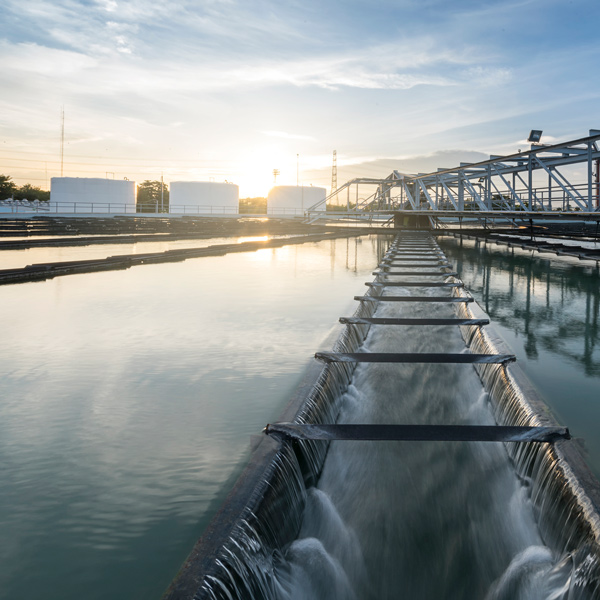
Wastewater H2S Treatment Plant

Additionally, H2S is a major cause of odors in wastewater treatment systems and is notable for its toxicity and its ability to corrode various materials used in sewer and treatment plant construction. (Source – EPA)

Much effort and many technologies have been developed and applied to combat H2S in both aqueous and gas phases, with varying degrees of expense, effectiveness, and side effects.   

One particularly effective method of treating H2S in solution is Liquid Redox.  While normally associated with treating H2S as a gas, liquid redox catalyst can be applied in the aqueous phase in combination with hydrogen peroxide to effectively and economically reduce dissolved sulfides and eliminating H2S odor problems.

We cover Liquid Redox and other H2S treatment methods in our White Paper Wastewater Odor Control Technology and Best Practices.

The key to the success of liquid redox treatment is the regenerative nature of the reaction.  It starts with a chelated (pronounced: key-late-ed) iron catalyst that has a strong affinity for the hydrogen atom in the hydrosulfide ion that destroys the sulfide, leaving elemental sulfur.  If the process stopped right there, it would be neither effective nor economical because the volume of catalyst would need to match the volume of sulfides.  

However, it does not stop there.  The second part is introducing hydrogen peroxide, an effective means of delivering oxygen in water, reacts with the reduced catalyst by taking the hydrogen and thus reactivating the chelated iron to react with yet another HS- ion.  This process continues until either all the oxygen is consumed or all the HS- is destroyed.   

The first part of the reaction is called “reduction”, the sulfide is reduced, and the reactivation of the catalyst is “oxidation”, the catalyst is oxidized.  The whole process together is known as “Liquid Redox”. 

There are several benefits to using Liquid Redox: 

  • First, it works.  High sulfides can be treated to non-detect levels, reducing odor and damage to pipes and equipment.   
  • Second, while more expensive than competitive chemical on a per gallon basis, the fact that the same catalyst reacts again and again with sulfides, less chemicals are required making Liquid Redox more economical from a total cost of treatment perspective.   
  • Third, Streamline’s liquid redox catalyst is safe to handle and transport and is a green biodegradable technology with no harmful byproducts. 

Streamline Innovations offers a particularly robust chelated iron catalyst, known as TALON®.  TALON chemistry is the keystone of the TALON Sulfide Elimination System, which helps reduce odor issues in industrial and municipal wastewater streams across the United States.  www.streamlineinnovations.com 

Contact

Contact Streamline Innovations to learn more about next generation Redox solutions for odor control and determine if the TALON Sulfide Elimination System is right for your wastewater facility.

Stewart North
Business Development Director, Municipal & Industrial
E: Stewart.North@streamlineinnovations.com
T: (859) 948-1638

About Streamline Innovations

Streamline Innovation’s vision is Eliminating Emissions Through Technology.  We help heavy industry around the world achieve environmental performance objectives, improve sustainability, and transition to a sustainable, low-carbon economy.

Streamline’s environmentally forward H2S treating solutions help achieve the “E” in ESG. H2S is present in many industrial processes throughout the world.  Our technology can be applied across industries, delivering a sustainable solution that eliminates H2S, a leading cause of human inhalation accidents and source of SO2 emissions, a primary cause of acid rain.  TALON chemistry treats effectively in both gas and water phases.

Streamline believes that achieving environmental sustainability directives requires data. Creating intelligent systems that operate effectively and efficiently without human intervention is critical to measuring and reducing emissions that harm the environment.   We integrate advanced process control, data collection and analytics in our technologies to provide a total solution for customers.

We serve organizations in multiple sectors, including Energy/Oil & Gas, Biogas, Landfill Gas & Renewable Fuels, Municipal Wastewater and Industrial Air & Water.

Streamline Innovations TALON™ Sulfide Elimination System™ (TSES™) is a low to no capex solution for treating H2S in water and wastewater, eliminating the source of foul odors, corrosion and cross reactions with other chemical processes with Hydroxyl Radicals.  The TSES utilizes our TALON Redox catalyst combined with an oxygen source (primarily Hydrogen Peroxide), creating an advanced oxidation process that breaks apart H2S and converts it to elemental sulfur.  

This video illustrates how TSES works in a typical wastewater treatment application, safely eliminating sulfides and permanently converting them into Simple Elemental Sulfur™ for use in Organic Food Production.