Loading
Making heavy industry cleaner, sustainable, more profitable.

Category: Permian Basin

12 posts

When Encountering High Concentrations of H₂S: Speed Matters

Unlocking the value of sour oil & gas assets is increasingly facing the challenge of treating produced water containing high levels of hydrogen sulfide (H₂S). In regions like the Delaware Basin region of the Permian Basin as well as South Texas, dissolved sulfide concentrations approaching or exceeding 200 ppm are becoming more common. These levels create serious safety hazards, corrosion risks, and operational bottlenecks at saltwater disposal (SWD) facilities and midstream transfer points.

While many treatment programs focus on chemistry itself, speed of treatment is often just as critical as chemical effectiveness. Produced water systems move continuously, and treatment solutions must react quickly enough to prevent H₂S from reaching downstream infrastructure or custody transfer points.

Field results from Streamline Innovations’ ThunderOx™ Sulfide Elimination System demonstrate that rapid reaction kinetics can fundamentally change the economics and operational reliability of produced water treatment.

Reaction Speed Is Critical in Produced Water Treatment

Produced water treatment systems typically operate in fast-moving environments. Water leaving tank batteries or central facilities may reach midstream transfer points within minutes. If chemical treatment cannot neutralize sulfides quickly enough, operators face several risks:

  • Custody transfer non-compliance if dissolved H₂S exceeds contractual limits (often <10 ppm).
  • Vapor-phase H₂S hazards, with storage tank headspace concentrations reaching lethal levels.
  • Corrosion damage to pipelines, tanks, and transfer infrastructure.
  • Operational delays or shut-ins while treatment levels are adjusted.

Traditional sulfide scavengers frequently require longer reaction times or higher chemical loading to achieve meaningful reductions in sulfide levels. This can lead to overtreatment, inconsistent results, and excessively high operating costs.

For high-volume produced water systems, slow treatment is simply not operationally viable.

Rapid Sulfide Elimination with ThunderOx

The ThunderOx H₂S Removal System from Streamline Innovations approaches sulfide treatment differently. Instead of relying on broad-spectrum oxidizers or high-dose scavengers, ThunderOx uses a selective liquid redox reaction that specifically targets sulfide species while in solution.

This selectivity allows the chemistry to react extremely quickly with dissolved H₂S.

Field testing demonstrated that ThunderOx can reduce sulfide concentrations within five minutes of mixing.

ThunderOx Field Test Results

During initial testing During initial testing at a SWD facility in Lea County, New Mexico:

Sample PointpHORPDissolved H₂S
Tank 1 Bottom5.7-316187 ppm
Tank 2 Bottom5.4-277196 ppm

Sample PointpHDissolved H₂S
Tank 1 Bottom6.30.55 ppm
Tank 2 Bottom6.50.26 ppm

Within minutes, sulfide concentrations dropped from nearly 200 ppm to well below 1 ppm.

This rapid reaction allows operators to treat water directly within existing tank systems or transfer infrastructure without requiring long residence times or complex treatment trains.

Real-Time Performance in Active Operations

After implementation, the ThunderOx system was deployed to treat produced water at an SWD facility handling approximately 5,500 barrels per day.

Operational results included:

  • Untreated H₂S (average): 122 ppm
  • Treated H₂S (average): 1.7 ppm
  • Custody transfer concentration: consistently below 1 ppm

Because treatment occurs rapidly, the system can eliminate sulfides before the water reaches downstream pipelines or transfer points, ensuring continuous compliance with midstream specifications.

For operators, this means reliable treatment without the need for excessive chemical dosing or extended holding times.

Rapid Treatment Enables Automation

The fast reaction time of ThunderOx also allows treatment to be integrated into automated facility operations.

At the Lea County site, the system was installed using:

  • Peristaltic chemical injection pumps
  • Chemical storage tanks
  • SCADA-based monitoring and control

The SCADA system provides:

  • Bi-directional pump control
  • Remote tank level monitoring
  • Real-time dosing adjustments

Because ThunderOx chemistry works quickly and predictably, dosing can be optimized automatically. A Streamline field operator now spends approximately one hour per day on site performing sampling and inspection.

This level of automation significantly reduces manpower requirements while maintaining consistent treatment performance.

Faster H2S Treatment for Produced Water = Lower Operating Costs

Rapid sulfide elimination does more than improve safety and compliance, it also lowers total treatment costs.

After deployment at the Lea County site, ThunderOx delivered:

  • Volume treated: 5,500 BBL/D
  • Monthly chemical savings: Over $1 million
  • Manpower requirement: ~1 operator hour per day
  • Infrastructure additions: Minimal (peristaltic pumps + storage tank + SCADA integration)

The speed of the reaction plays a major role in this economic improvement. Because ThunderOx reacts quickly and selectively, less product is required to treat each barrel of water, reducing overall consumption.

Safety Benefits of Rapid Sulfide Removal

Another critical advantage of fast sulfide elimination is improved worker safety.

Before treatment, headspace measurements at the facility exceeded 20,000 ppm H₂S, a concentration that can be immediately lethal.

By rapidly converting dissolved sulfides into elemental sulfur, ThunderOx reduces the formation of vapor-phase H₂S in tanks and equipment.

This significantly lowers:

  • Worker exposure risk
  • Odor emissions
  • Corrosion caused by sulfide gas

The result is a safer operating environment with fewer HSE hazards.

Transforming Produced Water Treatment for Sour Resources

Produced water management is becoming one of the defining operational challenges of modern oil and gas production. As operators encounter increasingly sour resources, sulfide treatment solutions must deliver three critical capabilities:

  1. Rapid reaction time
  2. Reliable sulfide elimination
  3. Cost-effective chemical usage

ThunderOx demonstrates how combining selective chemistry with rapid kinetics can meet all three.

For produced water systems where speed, safety, and cost control are essential, rapid sulfide elimination is not just beneficial, it is operationally necessary.

DOWNLOAD THE THUNDEROX CASE STUDY

If you’re evaluating sulfide treatment strategies for high-H₂S produced water, don’t rely on theory, review the field data.

Download the full ThunderOx™ case study to see:

  • Detailed before-and-after water quality data
  • Chemical loading ratios and dosing methodology
  • SCADA automation configuration
  • Economic analysis of treatment cost reductions
  • Operational results at 5,500 BBL/day in a high-sulfide SWD system

See how ThunderOx reduced dissolved H₂S from nearly 200 ppm to below 1 ppm in minutes, transforming both the safety and economics of produced water treatment.
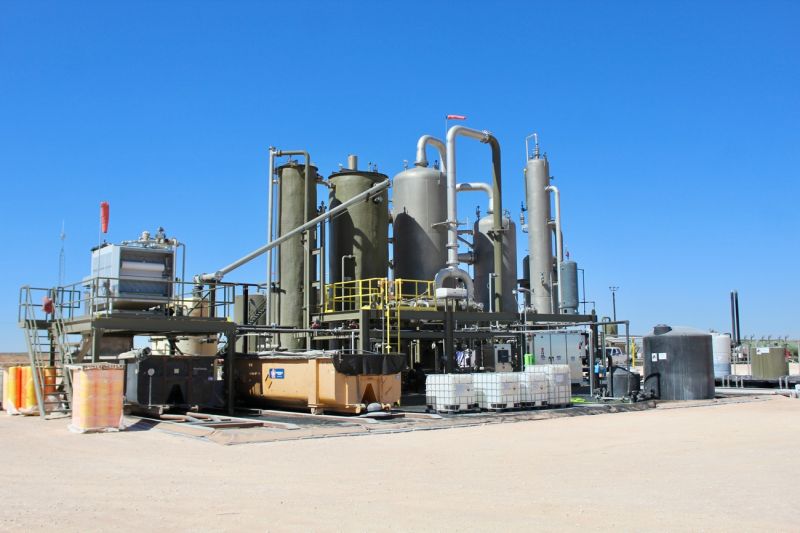
Streamline Innovations has launched its first VALKYRIE® units capable of treating up to 1.5 long tons per day of hydrogen sulfide (H2S) and handling up to 60 MMCFD of gas. These units offer a 50% increase in sulfur extraction compared to the standard system and the lowest cost onsite gas treating option for large volumes and concentrations of sour gas.

Importantly, VALKYRIE technology is known for its reliable and environmentally friendly liquid redox chemistry.   

More Options for Maximizing Operational Efficiency

The new 1.5 LTPD system expands the standard product offering, offering oil and gas operators more options for using VALKYRIE H2S treating technology across a broader range of production volumes and H2S concentrations. The 1.5-ton unit, developed with trusted partners, employs the same proven and eco-friendly liquid redox chemistry as all VALKYRIE units.

Successful Initial Deployments

The first VALKYRIE 1.5 LTPD unit was installed and commissioned on a production facility operated by Devon Energy during the first quarter of 2025. The 1.5-ton system successfully allowed for economic and environmentally friendly treating at a centralized tank battery (CTB), reducing total H2S treating costs, simplifying operations and improving overall operational efficiency.

Valkyrie 1.5 Ton H2S Treating Technology

Three additional 1.5 LTPD units have been delivered, installed and successfully commissioned with other operators in both the Midland and Delaware Basins.

Additionally, Streamline will deploy a 5th 1.5 LTPD unit in the Midland Basin in Q4 of 2025 and we are adding additional inventory and taking orders for 2026 delivery.

Benefits of VALKYRIE Gas Treating Technology

  • Reduced Capital Outlays. The VALKYRIE 1.5 LTPD unit can process more gas and extract more sulfur than any previous standard units, allowing it to replace multiple H2S scavengers using legacy treatments or permitting the use of only two VALKYRIE systems instead of three.
  • Lower Operating Costs.  The 1.5 LTPD unit continues the Streamline advantage of being the lowest onsite gas treating option for large volumes and concentrations of sour gas.
  • Remove Operational Constraints. Onsite gas sweetening also removes bottlenecks in areas where sour takeaway is constrained and unreliable or limited by lack of midstream processing capacity.
  • Non-Toxic and Eco-Friendly Chemicals: VALKYRIE technology employs non-toxic and environmentally friendly chemicals, minimizing harm to the environment and ensuring worker safety.
  • Turnkey Solution: Streamline handles all chemicals, maintenance, operations, and sulfur removal, taking away what is traditionally an operations headache for our customers.  We do this with 99+% operational uptime.
  • No Harmful Byproducts: The VALKYRIE treatment process produces no harmful byproducts, further contributing to environmental sustainability. The primary byproduct is Simple Elemental Sulfur™, approved by the Organic Materials Review Institute (OMRI) for use in organic food production.
  • Recyclability or Reusability: Many VALKYRIE systems allow for the recycling or reuse of chemicals, reducing waste and enhancing cost-effectiveness.

Contact

Randy Rohlfs
Chief Commercial Officer
Streamline Innovations, Inc.
randy.rohlfs@streamlineinnovations.com

About Streamline Innovations

Streamline Innovation’s vision is Reducing Emissions Through Technology.  We help heavy industry around the world achieve environmental performance objectives, improve sustainability, and transition to a sustainable, low-carbon economy.

TIME Magazine ranked Streamline in 6th place out of 250 companies included in TIME’s inaugural list of America’s Top GreenTech Companies 2024. This prestigious recognition is presented by TIME and Statista, Inc., a leading statistics portal and industry ranking provider. 

H2S is present in almost every industrial process in the world.  Our technology can be applied across industries, delivering a sustainable solution that eliminates H2S, the leading cause of acid rain, a deadly greenhouse gas dangerous for work and living environments.

Streamline believes that achieving the E (“Environmental”) in ESG requires data. Creating intelligent systems that operate effectively and efficiently without human intervention is critical to reducing emissions that harm the environment.   We integrate advanced data collection, process control, and analytics in our technologies to provide a total solution for customers.

We serve organizations in multiple sectors, including Energy/Oil & Gas, Biogas, Landfill Gas & Renewable Fuels, Municipal Wastewater and Industrial Air & Water.

Hydrogen sulfide (H2S) is produced from the decomposition of plant and animal matter, with around 90 percent of H2S emissions being naturally sourced. Hot springs and volcanoes also release substantial amounts of H2S. Natural gas containing significant levels of sulfur is termed “sour” and requires treatment before it can be distributed to residential, commercial, and industrial customers. Untreated H₂S is typically flared for safety reasons and to convert it into less dangerous pollutants, but the practice still generates emissions.  

How Sour is Sour?  

Natural gas produced from oil and gas wells is approximately 70-90 percent methane and contains up to 20 percent of heavier hydrocarbons, including ethane, butane, and propane. Gas produced from an oil or gas well typically contains other contaminants, too, including water vapor, sand, oxygen, carbon dioxide, nitrogen, and in many cases, hydrogen sulfide.  

There is no one set definition of what constitutes “sour” gas, because concentration levels can vary widely from area to area. The Texas Railroad Commission, however, defines sour gas as having an H2S concentration of 100 ppm or more as noted in Statewide Rule 36, which provides  provides sour gas operating requirements to safeguard worker and community safety (source: Statewide Rule 36).  

READ MORE: What Makes an H2S Treating Solution “Green”?

How Does Sour Gas Cause Emissions?  

Sour gas presents a threat to both human health and infrastructure. Sour gas production must be produced and transported using equipment specialized for “sour service,” treated and coated to withstand the corrosive effects of sour gas and is subject to stringent maintenance regimes. In some cases, very high levels of H2S contamination (10,000 ppm or greater) may require onsite gas treatment to reduce H2S to lower levels suitable for sour service handling. Otherwise, these assets cannot be produced.  

Traditionally, sour gas has been flared or combusted to transform the contaminated gas into less harmful substances. However, flaring sour gas produces other pollutants such as sulfur dioxide (SO₂), which contributes to acid rain; volatile organic compounds (VOCs); and nitrogen oxides (NOx), which can react with particulates and sunlight to form ozone. Additionally, incomplete combustion may release raw H2S into the atmosphere. 

Restrictions on flaring are increasingly stringent due to both regulatory mandates and voluntary industry efforts. For instance, the North Dakota Industrial Commission, which regulates the Oil and Gas industry in that state, requires operators to capture 90% of produced gas and reduce flaring. In New Mexico, the Oil Conservation Commission requires upstream and midstream operators to reduce routine natural gas flaring and venting by 98% by 2026.  

The U.S. Environmental Protection Agency has also recently revised its emissions regulations in NSPS OOOOb and EG OOOOc, aiming to phase out all non-emergency flaring in the future. 

Many operators have committed to voluntary emissions reduction programs. The Oil and Gas Methane Partnership 2.0 (OGMP 2.0) has emerged as an influential industry group who members include many large operators with producing assets in the United States and worldwide. OGMP 2.0 has developed a framework for estimating and reporting emissions from oil and gas operations, including emissions from tank venting, purging, and flaring.  

Gas Sweetening 

The process of treating sour natural gas to remove H2S so it can be sold instead of flared, generating emissions, is called “sweetening.”  

In our article, Gas Sweetening, Sour Gas Treatment Strategies by Volume, we identified the three primary categories of traditional gas treating methods for removing H₂S from produced gas, including (a) scavengers and adsorbents, (b) catalytic reactions, and (c) mechanical destruction or injection. These methods, however, have numerous downsides, including: 

  • Create negative downstream processing effects. 
  • Require the use of chemicals that can be expensive and present a safety risk. 
  • Require the disposal of contaminated media, creating environmental and safety risks. 
  • Operational complexity, requiring frequent oversight on location and problem solving. 

Valkyries Reduce Oil & Gas Emissions Using Next Generation Liquid Redox for H2S Treating 

The Liquid Redox (Reduction-Oxidation) process converts H₂S into elemental sulfur and water vapor byproducts using chemistry (Reduction) that can be regenerated and used again with exposure to air (Oxidation). 

Using a Next Generation Liquid Redox process, sour gas is directed into a treating vessel containing specialized chemistry and then exits the system sweet (without H₂S) into a gas sales line. The elemental sulfur byproduct is filtered out of the liquid, and the chemistry is then regenerated with exposure to oxygen. The regenerated chemistry is then recirculated back into the treating vessel to perform the reaction again. The regenerative nature of the chemistry reduces media changes, disposal costs and reduces chemical handling requirements on the well site. 

The VALKYRIE® H₂S treating solution from Streamline Innovations utilizes relatively recent technological advances in automation control to create the “Next Generation Liquid Redox” system. The VALKYRIE system utilizes TALON® chemistry, our non-toxic, biodegradable Redox chemistry. 

VALKYRIE technology is a true green solution, by reducing the flaring of sour gas and related emissions at oil and gas production sites by converting H₂S into harmless byproducts, including elemental sulfur certified for use in food production.  

READ MORE: Streamline’s Sulfur from H2S Receives Listing as an input for Organic Food Production 

The Streamline VALKYRIE H₂S removal system is the next generation of Liquid Redox (Reduction-Oxidation) to cost-efficiently help oil and gas operators unlock the value of sour gas resources and reduce emissions from oil and gas operations. 

VALKYRIE Technology Applications 

VALKYRIE H₂S treating units for sour gas sweetening and reducing emissions from oil and gas operations are suitable for a variety of oil and gas applications, including:  

  • De-bottlenecking sour gas takeaway constraints with onsite H₂S treating. 
  • Fuel gas conditioning for Gas Lift to minimize sweet gas buyback. 
  • Tail Gas treating. 

VALKYRIE gas treating units have been operating reliably for oil and gas producers in the Permian Basin and elsewhere, including Chevron Corporation, Franklin Mountain Energy, and Taprock Energy, among others. 

Benefits of the VALKRYIE gas treating system: 

  • A green solution that converts H₂S into benign substances including water and elemental sulfur. 
  • Universal application for biogas, landfill gas and oil and gas production. 
  • Widest operating envelope of any H₂S gas treating method extending across the full spectrum of pressures, flow rates and H₂S concentrations. 
  • Treating to established specifications for sales pipelines, gas lift and fuel gas. 
  • Flexibility of placement along the production stream whether at the anaerobic digester, at a landfill, wellhead, refinery, in a direct or tail gas treating configuration. 
  • Meets the most stringent outlet specifications. 

In our 2023 Sustainability Scorecard, the VALKYRIE fleet helped operators avoid 39.7 million pounds of SO2 emissions, among other benefits.  

READ MORE: Streamline Innovations 2023 Sustainability Scorecard 

Contact us today to learn how VALKYRIE H₂S treating technology can help you reduce emissions from your oil and gas production operations.  


About Streamline Innovations

Streamline Innovation’s vision is Reducing Emissions Through Technology.  We help heavy industry around the world achieve environmental performance objectives, improve sustainability, and transition to a sustainable, low-carbon economy. Streamline Innovations Leads TIME’s List of America’s Top GreenTech Companies of 2024.

H2S is present in almost every industrial process in the world.  Our technology can be applied across industries, delivering a sustainable solution that eliminates H2S, the leading cause of acid rain, a deadly greenhouse gas dangerous for work and living environments.

Streamline believes that achieving the E (“Environmental”) in ESG requires data. Creating intelligent systems that operate effectively and efficiently without human intervention is critical to reducing emissions that harm the environment.   We integrate advanced data collection, process control, and analytics in our technologies to provide a total solution for customers.

We serve organizations in multiple sectors, including Energy/Oil & Gas, Biogas, Landfill Gas & Renewable Fuels, Municipal Wastewater and Industrial Air & Water.

Streamline Innovations will be attending the HART Energy Executive Oil Conference 2023 on November 15-16 at the Midland County Horseshoe Arena in Midland, Texas.

David Sisk, CEO, and Kade Horton, Director of Business Development, will both be attending the event. Interested parties are invited to contact Kade Horton to schedule an appointment to learn more about Streamline’s environmentally friendly solutions for removing H2S from oil and gas production streams.

Streamline offers the world’s most efficient H2S gas treating solution. This Redox  process allows complete removal of H2S in natural gas with a resulting by-product of organic elemental sulfur and water. This technology is deployed at any stage of the natural gas life cycle: upstream production, midstream gathering and processing, and downstream refining.

Our VALKYRIE® H2S treating solutions use TALON® chemistry, a non-toxic and biodegradable Redox substance to remove H2S in an environmentally responsible way. The Simple Elemental Sulfur™ byproduct is approved by Organic Materials Review Institute (OMRI) for use in organic food production.

Contact

Kade Horton
Vice President of Business Development
Streamline Innovations, Inc.
kade.horton@streamlineinnovations.com

About Streamline Innovations

Streamline Innovation’s vision is Reducing Emissions Through Technology.  We help heavy industry around the world achieve environmental performance objectives, improve sustainability, and transition to a sustainable, low-carbon economy.

H2S is present in almost every industrial process in the world.  Our technology can be applied across industries, delivering a sustainable solution that eliminates H2S, the leading cause of acid rain, a deadly greenhouse gases dangerous for work and living environments.

Streamline believes that achieving the E (“Environmental”) in ESG requires data. Creating intelligent systems that operate effectively and efficiently without human intervention is critical to reducing emissions that harm the environment.   We integrate advanced data collection, process control, and analytics in our technologies to provide a total solution for customers.

We serve organizations in multiple sectors, including Energy/Oil & Gas, Biogas, Landfill Gas & Renewable Fuels, Municipal Wastewater and Industrial Air & Water.

Maintaining consistent production output can be a challenge as oil and gas reservoirs age. Over time, natural reservoir pressure diminishes, causing a decrease in production rates which impacts the economic viability of older wells and the value of proved reserves. When the natural drive of a well is no longer sufficient to bring liquids to the surface, artificial lift methods become indispensable. Among these methods, gas lift stands out as a cost-effective and efficient solution.

Gas lift is an artificial lift system where natural gas is injected into the well casing to assist in lifting liquids to the surface through the production tubing. Gas lift is employed when reservoir pressure declines, water cuts increase and gas-to-oil ratios (GORs) change over time. Gas lift systems provide operators with an effective and economical means of optimizing production in a wide range of well configurations, whether they are shallow or deep, vertical or horizontal.

Benefits of Gas Lift

Gas lift has several advantages that make it a preferred choice for artificial lift operations:

  1. Low Operating Costs: Gas lift systems often use the natural gas produced from the well as fuel for compressors used to inject gas back into the reservoir, commonly referred to as “lease use” gas. This usually results in lower operating costs compared to other artificial lift methods.
  2. Minimal Downhole Equipment: Unlike some other artificial lift systems, gas lift does not require the installation and maintenance of additional downhole equipment such as submersible pumps or rods. A downhole gas lift valve and compressor are typically all that is required. This simplicity translates to reduced capital outlays for equipment and maintenance expenses.
  3. Easier Maintenance: Gas lift systems have fewer moving parts than other artificial lift methods, leading to less wear and tear. There is no risk of a broken rod downhole, eliminating the need for a workover rig to fix it. This simplicity keeps repair costs relatively low.
  4. Ease of Replacement: When flow conditions change, the gas lift valve can be replaced cost-effectively without the need for a workover rig, minimizing downtime.

Sweet Gas Buyback

One challenge in gas lift operations arises when there isn’t enough natural gas produced at the well site for use in the system, or if the produced gas is contaminated with impurities like hydrogen sulfide (H2S). Gas contaminated with H2S, commonly referred to as sour gas, poses significant challenges to system integrity and human health, making it unsuitable for gas lift operations.

In these scenarios, operators often resort to purchasing “sweet gas,” usually from their midstream partner, to fulfill their gas lift requirements, a practice known as “sweet gas buyback.” Depending on the prevailing price of natural gas, however, sweet gas buyback may be prohibitively expensive.

Fuel Gas Conditioning – Dealing with H2S

As a highly corrosive and toxic gas, H2S must be effectively removed before it can be safely used in gas lift operations. Operators with sour gas operations can avoid the expense of buying back sweet gas by treating H2S on-site. This approach not only ensures a reliable source of gas for gas lift operations but can also lead to cost savings and environmental benefits.

In areas where midstream H2S treating capacity and sour takeaway is limited, on-site sour gas treatment can remove this constraint, providing the additional advantage of using the treated gas for gas lift. Even if adequate sour gas takeaway capacity exists, on-site H2S treatment reduces or can even eliminate the expense of sour gas takeaway.

Traditionally, sour gas has been treated using various methods, such as amine gas sweetening or scavengers. These methods, while somewhat effective, have drawbacks in terms of cost, environmental impact, and operational complexity.

READ MORE: Gas Sweetening | A Comparison Guide

Next Generation Liquid Redox (VALKYRIE®)

A promising solution for treating H2S in gas lift operations is the use of Next Generation Liquid Redox, which is the basis for our VALKYRIE H2S treating technology. This innovative approach offers several benefits over traditional methods:

  1. Reduced Expense of Sweet Gas Buyback: VALKYRIE technology enables on-site treatment of sour gas, reducing or eliminating the need for expensive sweet gas buyback.
  • Reduced Expenses Associated with Sour Gas Takeaway: Operators can reduce expenses related to sour gas takeaway paid to midstream partners, leading to significant cost savings.
  • Non-Toxic and Eco-Friendly Chemicals: VALKYRIE technology employs non-toxic and environmentally friendly chemicals, minimizing harm to the environment and ensuring the safety of workers.
  • Turnkey Solution: Streamline handles all chemicals, maintenance, operations, and sulfur removal, taking away what is traditionally an operations headache for our customers.  We do this with 99+% operational uptime.
  • No Harmful Byproducts: The VALKYRIE treatment process produces no harmful byproducts, further contributing to its environmental sustainability.
  • Recyclability or Reusability: Many VALKYRIE systems allow for the recycling or reuse of chemicals, reducing waste and enhancing cost-effectiveness.

Leading operators like Chevron and Franklin Mountain Energy have been using VALKYRIE technology for years for effective H2S removal.

LEARN MORE: VALKYRIE Technology for Gas Sweetening and H2S Removal

Summary

Gas lift is a valuable artificial lift method for optimizing production in oil and gas wells. It offers numerous benefits, including low operating costs, minimal downhole equipment requirements, ease of maintenance and versatility. However, in cases where sour gas is present the expense of buying back sweet gas can pose challenges.

The use of advanced sour gas treatment technologies like VALKYRIE units offer operators a green solution for sour gas sweetening that not only ensures a reliable source of gas for gas lift but also reduces costs, minimizes environmental impact and enhances safety. Embracing these innovative technologies can lead to more efficient and sustainable gas lift operations in the oil and gas industry.

Contact us today to learn more about Next Generation Liquid Redox H2S treating technology and determine if the VALKYRIE system is right for your operation.

Contact

Jacob Pratt
SVP – Sales
Streamline Innovations, Inc.
jacob.pratt@streamlineinnovations.com

About Streamline Innovations

Streamline Innovation’s vision is Reducing Emissions Through Technology.  We help heavy industry around the world achieve environmental performance objectives, improve sustainability, and transition to a sustainable, low-carbon economy.

H2S is present in almost every industrial process in the world.  Our technology can be applied across industries, delivering a sustainable solution that eliminates H2S, the leading cause of acid rain, a deadly greenhouse gases dangerous for work and living environments.

Streamline believes that achieving the E (“Environmental”) in ESG requires data. Creating intelligent systems that operate effectively and efficiently without human intervention is critical to reducing emissions that harm the environment.   We integrate advanced data collection, process control, and analytics in our technologies to provide a total solution for customers.

We serve organizations in multiple sectors, including Energy/Oil & Gas, Biogas, Landfill Gas & Renewable Fuels, Municipal Wastewater and Industrial Air & Water.

  • Streamline’s VALKYRIE technology is a green solution for treating sour gas, helping oil and gas producers unlock the value of sour gas assets in an environmentally friendly way
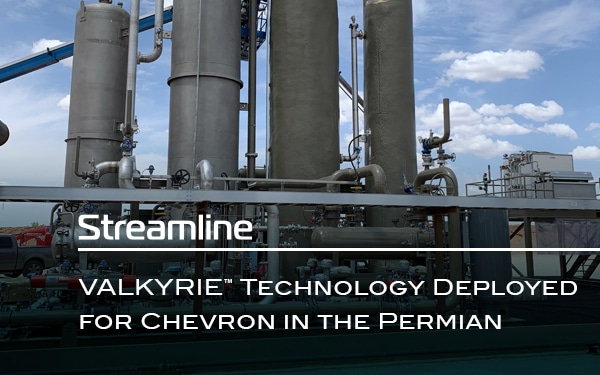
  • VALKYRIE units have been deployed to a Chevron production pad in the Permian Basin and have been operating reliably for four consecutive months

SAN ANTONIO, TEXAS (September 28, 2022)

Streamline Innovations, Inc. (“Streamline”) announced it is providing Chevron a solution for treating hydrogen sulfide (H2S) in the Permian Basin.

Valkyrie™ 1-Ton Skid in the Permian Basin
Streamline Innovations VALKYRIE™ 1-Ton Skid located in the Permian Basin.

VALKYRIE H2S treatment technology helps oil and gas producers overcome the constraint of limited sour take-away capacity, allowing the operator to produce and sell more oil and gas. Streamline’s technology safely and effectively treats H2S without flaring or injecting acid gas.

We recently deployed Streamline VALKYRIE 1.0 LTPD Skid Units to a Chevron location in Lea County, New Mexico. The units have been operating successfully for four months, helping Chevron develop and produce its sour gas assets in the area.

“Our VALKYRIE technology represents a green revolution for treating sour gas and is a true game-changer,” said Randy Rohlfs, Chief Commercial Officer with Streamline Innovations. “The VALKYRIE solution is a cost-effective, green technology that permanently dismantles the hydrogen sulfide molecule into harmless substances, eliminates flaring and allows operators to unlock the value of their sour gas assets in an environmentally friendly way.”

Randy Rohlfs, Chief Commercial Officer

Streamline is managing, servicing, and maintaining the fleet of VALKYRIE units under a Service Agreement, providing a turnkey solution to Chevron.

About Streamline Innovations

Streamline Innovations’ vision is Eliminating Emissions Through Technology. We help heavy industry around the world achieve environmental performance objectives, improve sustainability, and transition to a sustainable, low-carbon economy.

Streamline’s environmentally forward H2S treating solutions help our customers achieve environmental performance by significantly reducing emissions with our green H2S solutions. H2S is present in many industrial processes throughout the world, and our technology can be applied across industries, delivering a sustainable solution that eliminates H2S, a leading cause of human inhalation accidents, corrosion and SO2 emissions, a primary cause of acid rain.

We also believe that achieving climate-improving directives requires data. Creating intelligent systems that operate effectively and efficiently without human intervention is critical to measuring and reducing emissions that harm the environment. We integrate advanced process control, data collection and analytics in our technologies to provide a total solution for customers.

We serve organizations in multiple sectors, including Energy/Oil & Gas, Biogas, Landfill Gas & Renewable Fuels, Municipal Wastewater and Industrial Air & Water.

Visit streamlineinnovations.com for more information.

Contact

Randy Rohlfs
Chief Commercial Officer
Streamline Innovations
randy.rohlfs@streamlineinnovations.com

In our blog article Gas Sweetening | Sour Gas Treatment Strategies by Volume, we covered how natural gas, biogas, and water that contain sulfur compounds is considered “sour.” In low concentrations, these contaminants can cause maleficent odors, and in higher concentrations they can create serious hazards to both infrastructure and human health.

When methane gas is contaminated with hydrogen sulfide (H2S) or other sulfur compounds it is sour, whether it is produced from an oil and gas well or generated in an anaerobic digester as part of a Renewable Natural Gas (RNG) project. Considering methane gas, whether produced from a well producing from an underground oil and gas reservoir or generated on the surface in an anaerobic digester or landfill, being sour usually refers to the presence of hydrogen sulfide (H2S). Whether in the context of natural gas or biogas, gas sweetening is synonymous with hydrogen sulfide removal, also known as desulfurization.

The comparison guide below summarizes the major differences between gas sweetening methods, including their pros and cons.

MethodOperational FactorsEnvironmental Factors
Liquid Redox• Chemistry is reused, resulting in lower total cost
• No hazardous disposal requirements
Green technology with harmless byproducts, including elemental sulfur, which can be put to beneficial use
Scavengers and Adsorbents
• Frequent media changes
 
• Personnel can be exposed to chemicals and potential spontaneous combustion
 
• Can generate negative downstream effects
• H2S is not permanently destroyed, could eventually come out
 
• In most cases, must be disposed of in hazardous waste facility
Claus Process
• Established, proven process
 
• Requires large and expensive facilities staffed by skilled personnel
 
• Process efficiency does not reach 100% without recycling and tail gas treating

Desulfurizing creates crystalized elemental sulfur, which the main source for industrial applications
Biologics• Sensitive to process changes and upsets, not good for intermittent production scenarios
 
• Chemistry is high-alkalinity which must be diluted with water for HS&E concerns
 
• Requires larger footprint than other methods
• Biological regeneration is a green process
Flaring/Combusting• Routine flaring wastes a valuable natural resource that could otherwise be sold
 
• Reduced asset values
 
• Negative impact on community relations
• Flaring sour gas produces sulfur dioxide (SO2) emissions, a cause of acid rain
 
• Makes it more difficult to achieve environmental performance goals (e.g., achieving net zero)

As the next generation Redox process, Streamline’s VALKYRIE® H2S treating units use our patented TALON® chemistry, to provide a green solution for gas sweetening without the negatives associated with other gas treating alternatives.

VALKYRIE® units have the widest operating envelope of any treating technology relating to pressure, gas volume and H2S concentration with the lowest total lifecycle cost per pound of sulfur removed compared to all other competitors.  The VALKYRIE unit provides numerous tangible ancillary benefits.

SAN ANTONIO, TEXAS (March 29, 2022)

Streamline Innovations Inc. (Streamline) is proud to have recently deployed two new VALKYRIE® 1.0 LTPD Skid Units in Lea County New Mexico for Franklin Mountain Energy.

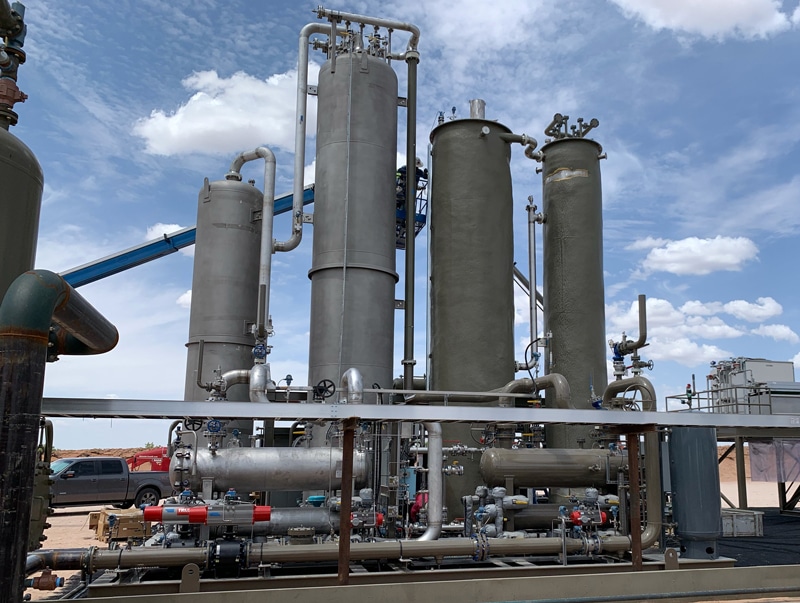
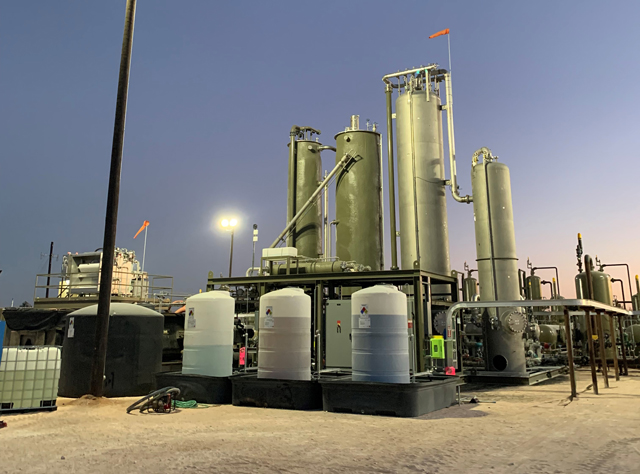
Standard VALKYRIE™ 1.0 LTPD Skid Unit for treating hydrogen sulfide (H2S) at a multi-well pad in the Delaware Basin in New Mexico.

Franklin Mountain Energy is now using four Streamline VALKYRIE units with five additional units on order.  Onsite gas sweetening with the VALKYRIE allows Franklin Mountain Energy to avoid operational issues and extra cost for sweet gas buy-back, allowing them to use their own gas for gas lift.

Streamline has been an instrumental partner in unlocking our resource value in a sour field. Since commissioning our first VALKYRIE unit in August 2021, we have brought online an additional three units.  The VALKYRIE technology is working effectively and is providing a safe and reliable solution for H2S removal from our gas stream.” 

-Travis Hutchinson, Director of Facilities at Franklin Mountain Energy

Processing capacity in the area has been limited by the substantial time and capital expenditures needed for the midstream companies to develop large-scale H2S treating or Acid-Gas Injection wells and extend sour lines to the operators.  Historically, acid gas or separated H2S could be flared, but pressure to reduce routine flaring has grown significantly and prevailing commodity prices have made sweetened gas more valuable.  With the VALKYRIE technology, operators have been able to overcome the constraint of limited sour take-away, while realizing more revenue from gas sales, in high performance, economical, environmentally sustainable manner.

VALKYRIE technology is an environmentally friendly way to convert a sour gas waste stream into revenue,” said Randy Rohlfs, Chief Commercial Officer at Streamline Innovations. “Traditional methods for treating hydrogen sulfide are typically expensive and often have negative operational and environmental effects. VALKYRIE units use a green technology that permanently dismantles the H2S molecule into harmless substances, eliminates flaring and allows for use of the sweetened gas for gas lift operations.”

VALKRYIE technology is changing how leading companies manage high H2S, providing a headache-free solution for operators.

About Streamline Innovations

Streamline Innovation’s vision is Eliminating Emissions Through Technology.  We help heavy industry around the world achieve environmental performance objectives, improve sustainability, and transition to a sustainable, low-carbon economy.

Streamline’s environmentally forward H2S treating solutions help achieve the “E” in ESG. H2S is present in many industrial processes throughout the world.  Our technology can be applied across industries, delivering a sustainable solution that eliminates H2S, a leading cause of human inhalation accidents and source of SO2 emissions, a primary cause of acid rain.  Talon treats effectively in both gas and water phases.

Streamline believes that achieving ESG directives requires data. Creating intelligent systems that operate effectively and efficiently without human intervention is critical to measuring and reducing emissions that harm the environment.   We integrate advanced process control, data collection and analytics in our technologies to provide a total solution for customers.

We serve organizations in multiple sectors, including Energy/Oil & Gas, Biogas, Landfill Gas & Renewable Fuels, Municipal Wastewater and Industrial Air & Water.

Contact

Steve Bagley
Director, Corporate Development
Streamline Innovations, Inc.

steve.bagley@streamlineinnovations.com

SAN ANTONIO, TEXAS (December 8, 2021)

Streamline Innovations today announced that a significant independent Permian Basin oil and gas producer has expanded their deployment of Streamline’s VALKYRIE® solution for treating hydrogen sulfide (H2S).

Standard VALKYRIE™ 1.0 LTPD Skid Unit for treating hydrogen sulfide (H2S) at a multi-well pad in the Delaware Basin in New Mexico.

This expansion follows the successful installation and operation of a single VALKYRIE 1.0 LTPD Skid Unit on one of the operator’s multi-well pads in Lea County, New Mexico earlier this year. Encouraged by the performance of the VALKYRIE units, the operator has procured additional units to treat sour gas at three more pads in the near term with plans for more units as they develop their leases.

Processing capacity in the area has been limited by the substantial time and capital expenditures needed for the midstream companies to develop large-scale H2S treating or Acid-Gas Injection wells.  Historically, sour gas or separated H2S could be flared, but pressure to reduce routine flaring has grown significantly and prevailing commodity prices have made sweetened gas more valuable.  With the VALKYRIE unit, the operator has been able to overcome the constraint of limited sour take-away, while realizing more revenue from gas sales.  

When complete, the field-wide deployment is expected to consist of 10 of Streamline’s standard 1-ton VALKYRIE Skids, each capable of processing well over 2,000 pounds of Sulfur from H2S per day.

Streamline is managing, servicing, and maintaining the VALKYRIE fleet under a long-term Operating Agreement, providing a headache-free solution to the operator.

About the VALKYRIE® Solution

The VALKYRIE® solution is Streamline Innovations’ suite of H2S gas treating systems.  The VALKYRIE system utilizes TALON®, our non-toxic, biodegradable Redox chemistry. In combination with our advanced automation and control technology, we have created “The Next Generation Redox” system. The gas sweetened by the VALKYRIE Unit is either sold or used for gas lift operations on the well pad, which eliminates the need to flare natural gas contaminated by H2S, further reducing emissions including potential emissions of SO2.

VALKYRIE systems have the widest operating envelope of any H2S Treating method extending across the full spectrum of pressures, flow rates and H2S concentrations.  There are multiple sizes and configurations of VALKYRIE skids and plants that can be placed anywhere along the production stream whether at the wellhead or refinery, in a direct or tail gas treating configuration. The VALKYRIE system has near 100% turndown without losing treating efficiency.  We don’t just treat, we treat to established specifications for sales pipelines, gas lift and fuel gas.  In addition, the VALKYRIE system with Talon treats other sulfur compounds in gas phase including mercaptans, sulfides, disulfides, and thiophenes. We specialize in meeting the most stringent outlet specifications.

Using proprietary and proven Streamline technology, the VALKYRIE solution permanently destroys H2S by converting it into elemental sulfur, which is listed with the Organic Material Review Institute (OMRI) for use in Organic Production as Simple Elemental Sulfur™.

All VALKYRIE units include our intelligence platform for local monitoring and automated controls as well as our robust SCADA system allowing remote monitoring, control and analytical capabilities.  Our portal is available for smart phones, tablets and desktops.  We maintain a 24/7 control room to ensure highest uptime and operational integrity.  Streamline provides a range of operational support, from full turnkey operations to remote monitoring and analytical services.

About Streamline Innovations

Streamline Innovation’s vision is Eliminating Emissions Through Technology.  We help heavy industry around the world achieve environmental performance objectives, improve sustainability, and transition to a sustainable, low-carbon economy.

Streamline’s environmentally forward H2S treating solutions help achieve the “E” in ESG. H2S is present in many industrial processes throughout the world.  Our technology can be applied across industries, delivering a sustainable solution that eliminates H2S, a leading cause of human inhalation accidents and source of SO2 emissions, a primary cause of acid rain.  Talon treats effectively in both gas and water phases.

Streamline believes that achieving ESG directives requires data. Creating intelligent systems that operate effectively and efficiently without human intervention is critical to measuring and reducing emissions that harm the environment.   We integrate advanced process control, data collection and analytics in our technologies to provide a total solution for customers.

We serve organizations in multiple sectors, including Energy/Oil & Gas, Biogas, Landfill Gas & Renewable Fuels, Municipal Wastewater and Industrial Air & Water.

Contact

Steve Bagley
Director, Corporate Development
Streamline Innovations, Inc.

steve.bagley@streamlineinnovations.com

SAN ANTONIO, TEXAS (September 21, 2021) – Streamline Innovations today announced the successful installation, startup and operation of a Standard VALKYRIE® 1.0 LTPD Skid Unit for treating hydrogen sulfide (H2S) at a multi-well pad in the Permian Basin. The customer is an active independent oil and gas operator focused on developing assets in the New Mexico part of the Permian Basin, in the Delaware Basin region. The production pad is in Lea County, New Mexico. 

Standard VALKYRIE™ 1.0 LTPD Skid Unit for treating hydrogen sulfide (H2S) at a multi-well pad in the Delaware Basin in New Mexico.

The VALKYRIE Unit is designed to treat up to 10 MMscfd of natural gas having H2S concentration levels up to 2,700 parts per million. This is the first installation of what is expected to be a field-wide deployment of multiple VALKYRIE units to treat all the client’s natural gas production volumes in the region.  

The customer chose the VALKYRIE in part to support its gas lift operations, eliminating the need for sweet buy-back gas and enhanced operational control.  

The Unit provides multiple benefits including the destruction of the H2S, converting it into Simple Elemental Sulfur™, which is listed with the Organic Material Review Institute (OMRI) for use in Organic Production.  The sweetened gas is being sold instead of flared, generating additional revenue and reducing SO2 emissions to simultaneously improve both environmental performance and economic benefits.  

Additionally, Streamline is managing, servicing and maintaining the Unit under a long-term Operating Agreement, providing a headache-free solution.  

About VALKYRIE®

The VALKYRIE plant lineup is Streamline Innovations’ suite of H2S gas treating systems.  The VALKYRIE system utilizes TALON™, our non-toxic, biodegradable Redox chemistry. In combination with our advanced automation and control technology, we have created “The Next Generation Redox” system. The gas sweetened by the VALKYRIE Unit is either sold or used for gas lift operations on the well pad, which eliminates the need to flare natural gas contaminated by H2S, further reducing emissions including potential emissions of SO2

VALKYRIE systems have the widest operating envelope of any H2S Treating method extending across the full spectrum of pressures, flow rates and H2S concentrations.  The VALKYRIE system can be placed anywhere along the production stream whether at the wellhead or refinery, in a direct or tail gas treating configuration. VALKYRIE units have near 100% turndown without losing treating efficiency.  We don’t just treat, we treat to established specifications for sales pipelines, gas lift and fuel gas.  In addition, the VALKYRIE units with TALON chemistry treats other sulfur compounds in gas phase including mercaptans, sulfides, disulfides, and thiophenes. We specialize in meeting the most stringent outlet specifications. 

All VALKYRIE include our intelligence platform for local monitoring and automated controls as well as our robust SCADA system allowing remote monitoring, control and analytical capabilities.  Our portal is available for smart phones, tablets and desktops.  We maintain a 24/7 control room to ensure highest uptime and operational integrity.  Streamline provides a range of operational support, from full turnkey operations to remote monitoring and analytical services. 

About Streamline Innovations

Streamline Innovation’s vision is Eliminating Emissions Through Technology.  We help heavy industry around the world achieve environmental performance objectives, improve sustainability, and transition to a sustainable, low-carbon economy.  

Streamline’s environmentally forward H2S treating solutions help achieve the “E” in ESG. H2S is present in many industrial processes throughout the world.  Our technology can be applied across industries, delivering a sustainable solution that eliminates H2S, a leading cause of human inhalation accidents and SO2 emissions when burned, a primary cause of acid rain.  TALON™ chemistry treats effectively in both gas and water phases. 

We also believe that achieving ESG directives requires data. Creating intelligent systems that operate effectively and efficiently without human intervention is critical to measuring and reducing emissions that harm the environment.   We integrate advanced process control, data collection and analytics in our technologies to provide a total solution for customers. 

We serve organizations in multiple sectors, including Energy/Oil & Gas, Biogas, Landfill Gas & Renewable Fuels, Municipal Wastewater and Industrial Air & Water. 

Contact

B.G. Clark
Chief Development Officer
Streamline Innovations, Inc.

bg.clark@streamlineinnovations.com