
In our blog article Gas Sweetening | Sour Gas Treatment Strategies by Volume, we covered how natural gas, biogas, and water that contain sulfur compounds is considered “sour.” In low concentrations, these contaminants can cause maleficent odors, and in higher concentrations they can create serious hazards to both infrastructure and human health.
When methane gas is contaminated with hydrogen sulfide (H2S) or other sulfur compounds it is sour, whether it is produced from an oil and gas well or generated in an anaerobic digester as part of a Renewable Natural Gas (RNG) project. Considering methane gas, whether produced from a well producing from an underground oil and gas reservoir or generated on the surface in an anaerobic digester or landfill, being sour usually refers to the presence of hydrogen sulfide (H2S). Whether in the context of natural gas or biogas, gas sweetening is synonymous with hydrogen sulfide removal, also known as desulfurization.
The comparison guide below summarizes the major differences between gas sweetening methods, including their pros and cons.
| Method | Operational Factors | Environmental Factors |
|---|---|---|
| Liquid Redox | • Chemistry is reused, resulting in lower total cost • No hazardous disposal requirements | Green technology with harmless byproducts, including elemental sulfur, which can be put to beneficial use |
| Scavengers and Adsorbents | • Frequent media changes • Personnel can be exposed to chemicals and potential spontaneous combustion • Can generate negative downstream effects | • H2S is not permanently destroyed, could eventually come out • In most cases, must be disposed of in hazardous waste facility |
| Claus Process | • Established, proven process • Requires large and expensive facilities staffed by skilled personnel • Process efficiency does not reach 100% without recycling and tail gas treating | Desulfurizing creates crystalized elemental sulfur, which the main source for industrial applications |
| Biologics | • Sensitive to process changes and upsets, not good for intermittent production scenarios • Chemistry is high-alkalinity which must be diluted with water for HS&E concerns • Requires larger footprint than other methods | • Biological regeneration is a green process |
| Flaring/Combusting | • Routine flaring wastes a valuable natural resource that could otherwise be sold • Reduced asset values • Negative impact on community relations | • Flaring sour gas produces sulfur dioxide (SO2) emissions, a cause of acid rain • Makes it more difficult to achieve environmental performance goals (e.g., achieving net zero) |
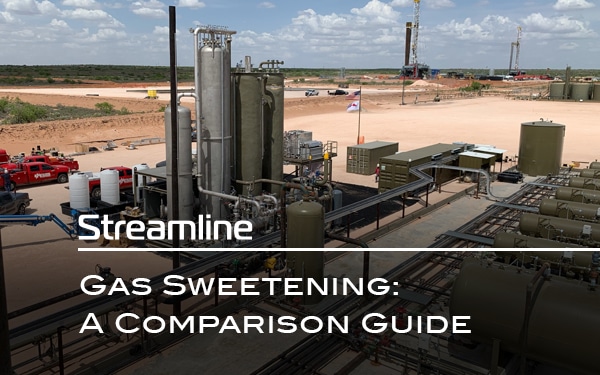
As the next generation Redox process, Streamline’s VALKYRIE® H2S treating units use our patented TALON® chemistry, to provide a green solution for gas sweetening without the negatives associated with other gas treating alternatives.
VALKYRIE® units have the widest operating envelope of any treating technology relating to pressure, gas volume and H2S concentration with the lowest total lifecycle cost per pound of sulfur removed compared to all other competitors. The VALKYRIE unit provides numerous tangible ancillary benefits.